Dealing with weeds may be one of the worst parts of gardening. No matter how diligent you are or how much you cover crop and mulch there will always be a few that get by you and mature. While I’ve often heard gardeners refer to edible weeds with the positive motto, “if you can’t beat them eat them.” It doesn’t always work for me. When I’ve worked hard to nurture a late crop of heirloom lettuce onto our plates, a salad of wild greens just doesn’t have the same appeal. However there are medicinal uses for some of the pesky garden weeds that plague your summer chore list. Here’s a list of common medicinal weeds and how they can be used.
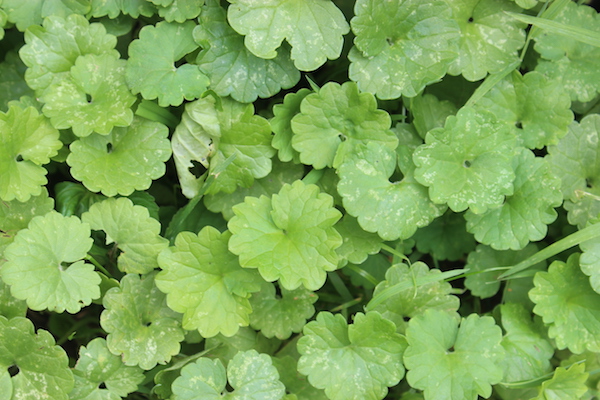
Ground Ivy/Creeping Charlie
Ground Ivy is edible but not exactly tasty. It has been used medicinally treat a variety of ailments. It’s astringent, anti-inflammatory, and very high in vitamin C. It was once used to treat scurvy. Today you can make it into an immune boosting tea or tincture.
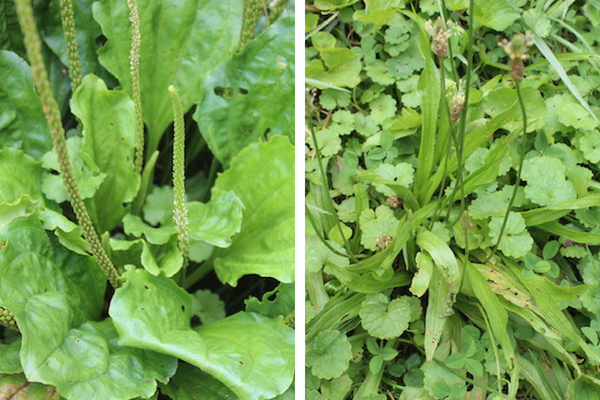
Plantain
There are two common types of plantain, Plantago major (left) and Plantago lanceolata (right), and both share the same medicinal properties. Plantain leaves and seeds are edible and full of important vitamins but the leaves are most frequently used externally. The leaves have anti-microbial and anti-inflammatory properties and can be crushed and placed on small injuries and insect bites to help soothe and heal.
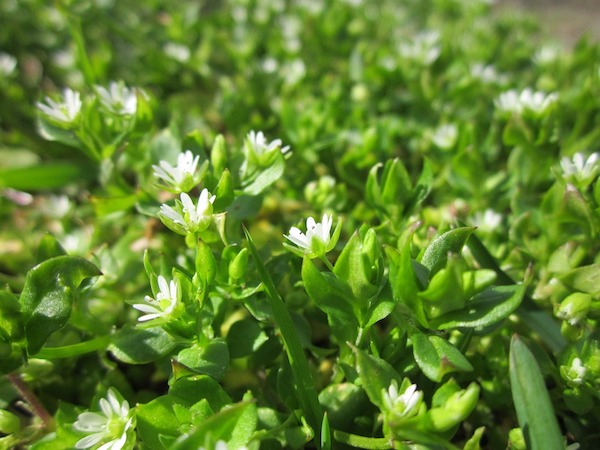
Chickweed
This plant is often used to treat stomach conditions including constipation. It’s also high in vitamin C and can be made into a tincture or eaten fresh.
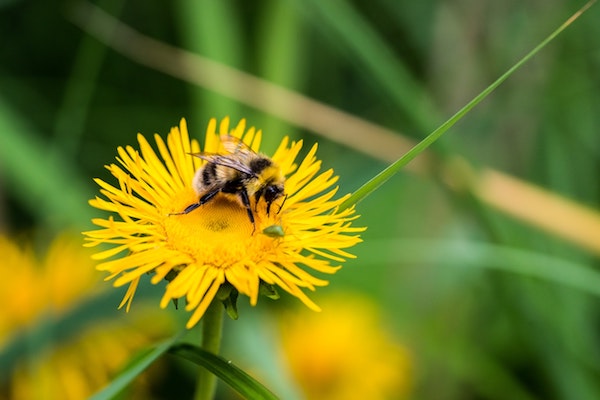
Dandelion
Flowers, leaves, and roots, all parts of the humble dandelion are medicinal. Though it hasn’t been well studied dandelion is believed to help support liver function and balance hormones. The leaves and flowers can be dried as tea, made into a tincture, or eaten fresh. The roots are sometimes ground and dried as a coffee substitute.
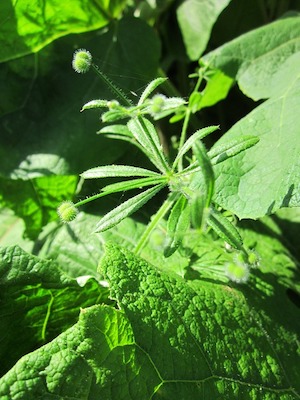
Cleavers
Also called goose grass or bedstraw, this plant is most commonly used as an herbal tea to treat urinary infections and promote kidney health. The plant and its seeds are very good at sticking to clothing.
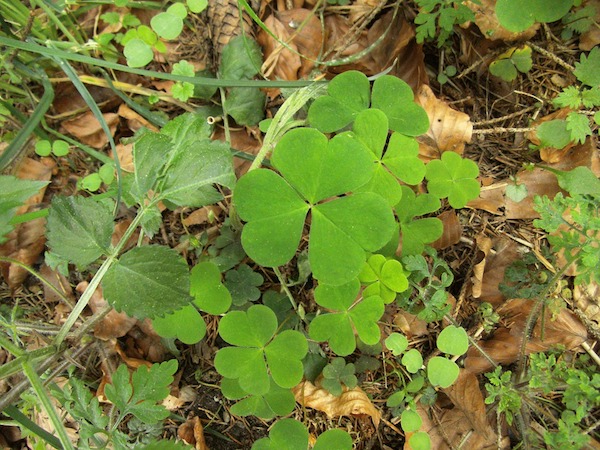
Wood Sorrel
Wood sorrel was once commonly believed to a blood cleanser. It has also been used to treat stomach ailments including vomiting and a poor appetite. Juice from wood sorrel plants is believed to helpful in treating ulcers when used as a mouth rinse. It’s also thought to help treat sore feet when added to a tub of warm water, a perfect use for the busy gardener! Though tasty, it should be consumed in moderation as it is high in oxalic acid which can inhibit calcium absorption.
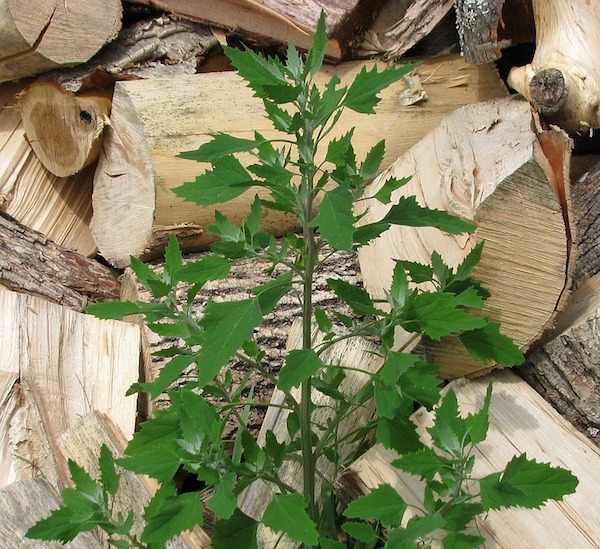
Lambsquarters
Lambsquarter actually is quite tasty but it can also be used medicinally. Traditionally it was used internally, either eaten fresh, cooked, or made into a tea to treat rheumatic pains and chronic wounds. It’s can also be crushed and used as a poultice to help soothe eczema, sunburns, and insect bites.
Using a few herbal remedies won’t eradicate the weeds from your garden or replace your costly health insurance but maybe it will help you connect with nature. Maybe it will make you a little less sad to see weeds popping up in your garden. What weeds have you utilized from your garden?
I’m not a medical practitioner or herbal medicine expert. Please consult a doctor before trying to use herbal remedies to treat any ailment. Some plants may interact with certain prescriptions or pre-existing conditions.
I would get grounded a lot. And for a lot of kids I think that’s pretty normal. But the catch is is my father is military. So his grounding is you go to your room for a week-long increments and everything is taken out of there that could be thought of as fun for you. No posters no books no toys definitely no electronics but I was a kid in the 80s so there wasn’t much chance of that. Being grounded for 3 weeks in the summer was brutal. I do recall my best friend standing down the hill out my window so that he could entertain me silently by jumping around like an idiot just to keep me from feeling like I was going insane. Good friend.
Parentinh is an extremely complicated job. You have to be loving but firm. You must be patient without being a doormat. And you have to provide structure for your children without being authoritarian. It can be difficult to strike the perfect balance, but when in doubt, rely on making sure your kiddos never question how much you love them.
Unfortunately, some parents prioritize disciplining their children over anything else, which can lead to an extremely painful childhood. Redditors have recently been recalling the most brutal punishments their mothers and fathers gave them growing up, so we’ve gathered some of their stories below. From extreme groundings to behaviors that should have had CPS on their doorsteps, we’ll warn you right now that some of these accounts might break your heart.
The bestest of friends! Hope you are still on each other’s lives
15
When I didn’t get anything to eat for dinner because there were 10 of us and not anything left after everyone else took food. If I said anything about being hungry because I got no food my mother went nuts. She would scream at me and say I am a liar. Then as punishment she would deprive me of any food and demand I stay in my room or I would get a beating. So I would go days with nothing to eat because the punishment for not getting dinner and saying something was not getting dinner for a couple more days. Having a mother that lies a lot more than me calling me a liar is pretty ridiculous. If I give her eulogy it won’t be to talk about how she was a great mother.
I’m adopted and all three of my kids are. I found my birth family and FIVE sisters! Then my daughter’s bio-brother contacted her and they have four siblings in another country. We are literally an amazing patchwork family! . What’s the point of shaking someone? It’s cruel too. I’m sorry for this person.
To find out more about this thread, we reached out to the Reddit user who invited others to share their stories, ComprehensiveFun2054. They were kind enough to have a chat with Bored Panda and share what inspired them to start this conversation.
“I asked the question because one time with my friends, we opened up about our past experiences as kids,” the author said. “It just turned into this debate about whether or not we deserved some of [the punishments we got]. But I noticed there were a range of punishments that I didn’t think would come from any sane parent, and those were just my friends’ [stories]. So I thought, ‘What about the weird, traumatized Reddit community?’ and they didn’t disappoint.”
#4
I once caught a chest cold when I was about 10 or so, except after a few days, I didn’t get better. I got worse. It got to the point where I could barely breathe. My mom insisted I must just be lacking in some vitamins, so she forced me to take these massive calcium and vitamin C pills. I didn’t get better. Things got progressively worse until the principal at the school actually called her and said “take your daughter to the d**n doctor” and the threat of looking bad in front of someone of authority absolutely scared her so she did. Turns out I had developed asthma and my blood oxygen levels were like 86%.
They gave me a rescue inhaler but she wouldn’t let me take it until we got home OH BUT FIRST though we had to order a pizza and wait for it to be ready. I still remember fading in and out of consciousness on the way home. Then she finally read the paper and I got to take that inhaler… and it was like the clouds opened up and I COULD BREATHE. It took about 6 months of serious treatment to get my lungs back to something resembling normal.
-Being banned from being a part of the family; Meals in solitude after everyone was asleep, not allowed to be speak to or make eye contact with anyone, not allowed to come out of my room except school and toilet.
-Hair cutt off to chin length because I had anxiety and would chew my hair.
-Punched me in my 7 year old face ” accidentally breaking my nose,” because I was mucking around late at night when my cousin slept over.
-Grounded for 2+ weeks because parent threw a knife and it went into their new expensive couch, because they were frustrated by their unsuccessful attempts to catch and stab me.
Hit me in the back with a whole frozen chicken because I was delayed 10 minutes getting home.
-Banned from showering /bathing completely.
-Being left alone in a room for so long as punishment, my parent forgot me and went home.
-Being excluded from a 2 month international family holiday for talking back.
Guess who was the only half sibling in a family with both a resentful parent and an a*****e Step-parent?
Though I was always well dressed and made to look presentable to keep up with our wholesome middle-class life.
Years later, my mother apologised, explaining she had tried to break me with more and more extreme punishment because I didn’t complain or cry when punished, I just accepted it, which she found unsatisfying.
Both my parents were teachers. I spent the entire four years of high school grounded for getting C’s on my report card. No homecomings, no prom, no summers playing with friends. They were flabbergasted when I didn’t go to college, even when they told me they would disown me on graduation day if I didn’t go.
I am now a fifty-year-old man with an anxiety disorder so severe that I literally just s**t myself because I was too afraid to leave my room to go to the bathroom. Thanks, mom and dad for instilling the importance of education in me!
Thankfully, the OP said that they never received any particularly brutal punishments as a child. “I wasn’t punished a lot as a kid, mostly time outs in my room or not going out with them,” they shared.
But we were curious if they had any ideas about what the most effective way to discipline a child without traumatizing them would be. “It’s different from child to child, I can’t say or judge since I don’t have a kid yet,” the author noted. “But you need to remember that it’s just a kid at the end of the day. And most of the things you could punish them for, they learn from you, at least until school. So just try to handle it whatever way you think is right, but I just hope you are a normal, sane person.”
My parents took me out of school (7th grade) for vacation. I went to all my teachers and asked for work to take with me.
When we came back after 2 weeks, I turned in my completed work.
HOWEVER, mid quarter progress reports went out just before we returned, and my grades were bad because I was missing 2 weeks of homework (which I had since turned in.)
I was grounded until my next report card (which had all As except for science.)
My step dad would make me write out whatever I did “wrong” a thousand times, or fill a notebook. “I will not lie. I will not lie. I will not lie. I will not lie. I will not lie. I will not lie. I will not lie. I will not lie.” Tough break when art was my passion but my dominant wrist is now cooked from it and I deal with carpal tunnel pain daily.
This type of thing just makes kids better liars. They won’t go to their parents for help or advice when they do something wrong for fear of punishment, so they learn to lie, hide things and cover up mistakes to avoid punishment.
Finally, we asked ComprehensiveFun2054 what they thought of the replies to their post. “A lot surprised me for bad reasons, unfortunately,” they told Bored Panda. “And I just hope that everyone who got treated like that raised their kids differently.”
#10
Silent treatment , being ignored by everyone in the family for a period of time, because “ you were lying and didn’t admit to doing so or so , so until you decide to speak the truth no one wants to hear you “ and after days , it turned out it was my cousin who did the “ thing “ , well i never got an apology, but ended up developing avoidant attachment issues that I have no idea how to cure .
I don’t remember what I did, but my dad whooped me with a hardback Bible. It wasn’t the regular book size either. It was a kids’ Bible, which was more of a picture book. It was wide and flat. Whipped me with it, then threw it across the room while screaming at me. He was a psycho when I was a kid. Now he’s nearing 70 and likes to reminisce about how good a childhood my sister and I had. I always correct him on it.
My mom made us get super involved with sports to the point we didn’t do anything on weeknights but practices for those sports and weekends involved practice or traveling for competitions. If we asked to do something on a weekend we had a time slot for so many hours and it was only 1 day. So if we chose to hang with a friend on Friday night till 9:00pm that was it for the whole weekend. No wonder we all went off the deep end when we turned 18, quit every sport and I hit the bars to party. I’m fine now but man, I missed out on some fun teen years.
My dad gave me “taps”. He’s 6’5 and used a fraction of his strength to hit me and it hurt like hell. I will never ever raise a hand to my kids because he swears to this day it wasn’t a full smack but we simply don’t know our own strength as adults on a kids pain tolerance. I knew my boyfriend was going to be my husband when we talked about discipline and he had a similar experience, also stating he would never hit his kids because it f*s them up mentally and I agree, man.
Smashing my Xbox to bits with a baseball bat before slashing the curtains with a knife to prove a point that leaving my shoes by the front door wasn’t on. I was 8.
My siblings and I got sent to our rooms without Thanksgiving dinner. The reason? My mom flew off the handle at us because we weren’t cleaning the house to her liking, after we came home from church. That was the moment I realized there was something mentally wrong with my mom.
My mother would always find something wrong with my completed chores, no matter how hard I tried, and start screaming. So voluntarily doing my chores in a timely manner actually simply resulted in activating another session of being screamed at! I finally gave up trying to do them until she screamed at me as at least it seemed fairer to be screamed at for not doing them.
When I was very young my father ran a basin of water and shoved my head into it, over and over, while screaming at me. Not incredibly violent, but traumatizing. However I did go on to be a competitive swimmer! Learning to hold my breath early in life!
My mom would lock me in a room for hours on end. No food, water, or bathroom, and nothing for me to really do in there at all. If I cried too loudly, or god forbid had an accident because I couldn’t hold it any longer, she’d come in and beat me.
Eventually as I got older I learned to brace the door so she couldn’t come in. I’d often run into the room if I knew she was gonna skip the whole process and outright beat me for something. I’d sit with my back against the door, and use all my strength to push my feet against the dresser in there, which worked pretty well considering it was a 45yr old against a 10yr old. _eta: though, this started as a toddler and went on until I was 12 and she abandoned me._
Unfortunately the door was slatted, think like a closet door. A few times she would force her hands through the slats, and she would rip my hair out to get me distracted enough to break in. Of course that only taught me to lean far enough forward so she couldn’t reach my head, but that led to her grabbing knives and other long sharp objects, and stabbing me where my back was touching the door. She never made me bleed (really didn’t have enough leverage considering the angle) but I often had long open scrapes down my back.
The one that freaks people out is that I was withheld food and bathroom breaks for not understanding long division in a timely manner for my aunt.
That or being forced to clean her entire house and land from top floor to basement while on a time crunch because I broke our hamster’s enclosure while cleaning it.
6th grade, last concert of the year, I have a huge solo. I told my mom that I got a sheet to see the councilor the next day (moving into Jr High stuff). She completely misunderstood what I had said, thought it was for her, and beat me from the top of my head to the bottom of my feet with one of those little plastic belts that were popular at the time. Welts everywhere.
Then I had to get changed into my choir clothes and go and sing.
I begged one of the teachers to let me go to my classroom and grab my “homework” out of my desk, the obliged, and I grabbed a textbook and shoved that paper inside of it.
Came home and showed my mom the note, that it was for me and not her. All she said was that I “needed to be more clear” when I was talking to her.
All of these years later, when we were still talking, she said something along the lines of “you will never forgive me for that will you?” And I told her “nope.”.
Not from my parents but from my older sister who used to baby sit me. Drinking a cup of vinegar then being locked in the attic……she was not a nice person.
This is still on the parents. It’s their responsibility to ensure you were left with someone safe. They failed.
14
reply
#22
Worst, as in lasting consequences? I was 15/16 and my dad had remarried this woman who was a horrible stepmother. I can’t really remember what led up to it, but I’m fairly certain it was because I was standing up for myself over something trivial.
At the time, I was playing in a band that was sponsored by the city I live in. As punishment, she refused to let me go to rehearsals on the regular; it got to the point where I was kicked out (despite it not being my fault) and I was told I could never play for them again. I think she knew that her usual punishments wouldn’t work on me and so that woman kept me from going to s***w me over.
I would see her again when I was 19/20, after she and my dad divorced. She tried to be nice and cordial, but I called her a fat toad and gave her the finger. Never saw her again, and I hope she just hopped off to some swamp never to be seen again.
I can’t even list which punishment was the worst. Too many of them left me bloody, and with scars on my skin that I can still see decades later as a grandparent.
Anytime my dad saw me hanging out reading a book he would find a chore for me to do. I started hiding down at the creek with a book and some snacks all day. I still dislike him.
Needs a little more context – how old was OP and what exactly was the labour? If they were a 16 year old expected to help with yard work, that’s a lot different than an 8 year old being forced to build a barn.
Being locked up in the basement and not allowed to come up to use the bathroom or to eat until my ex-stepdad thought I learned my lesson. Forgot to clean up a mess one night before I fell asleep. I was around 10. It’s happened a few times and I absolutely hate being in any type of basement now and I hate being in a room where the door can lock from the outside. I need to make sure I have a way to get out at all times.
I was about 12yo and in the hospital. Doctor added a new medication. I soon complained of racing heart rate and chest pain. Staff wheeled me to the ER to get checked but by then it had passed.
As punishment for “lying” I was physically held down while they forcefully medicated me.
Years later I found that this medication has a warning for a common serious side effect of causing rapid heart rate and arrhythmias. In some individuals these heart issues can be permanent. And as an adult I have arrhythmias among other cardiac issues.
A huge wildfire broke out in Rafina, a coastal town east of Athens, forcing for evacuations, road closures and flight delays at the capital’s international airport. At the same time, Crete is also tormented by a major wildfire near Ierapetra, in Lasithi region, with hundreds of residents and tourists evacuated from the area.
HDN Newsroom
Wildifire in Rafina
The fire started around 3:02 p.m. (local time), on Wednesday afternoon, in the broader area of Agia Kyriaki Hill, at the intersection of Marathonos Avenue and Arionos Street, near the residential district of Pikermi. It has since grown significantly and is now burning in a mixed zone of homes, trees, and vineyards. The Fire Service has described the blaze as “difficult and dangerous.”
The fire has spread uncontrollably toward the nearby town of Spata, driven by strong winds. Some homes have reportedly been evacuated forcefully, and while official confirmation is pending, authorities have not ruled out the possibility of structural damage.
Firefighting efforts have been reinforced significantly. As of late Wednesday afternoon, 150 firefighters, seven ground teams, 36 vehicles, four aircraft and six helicopters were battling the blaze. Helicopters are refueling off the coast at the port of Rafina.
Authorities issued an emergency 112 alert at 3.31 p.m., urging residents in Agia Kyriaki, Etos Steko, Imeros Pefkos and Vounopoli to evacuate toward the Artemida sports stadium.
Marathonos Avenue remains closed in both directions: toward Athens from the junction with Alexandrou Fleming Street, and toward Marathon from Agiou Dimitriou Street. Police have asked drivers to avoid the wider Pikermi area and follow detour instructions. A local municipal official also appealed for roads to be kept clear to facilitate emergency access.
Thick smoke from the fire has disrupted operations at Athens International Airport. with some flight delays reported, according to public broadcaster ERT.
The fire continues to burn amid high winds and dry conditions, which have elevated wildfire risks across the region.
Hundreds of residents and tourists evacuated as wildfire rages in Lasithi, Crete A major wildfire that broke out on Tuesday near Ierapetra in Crete’s Lasithi region continued to defy firefighting efforts on Thursday morning and prompted the evacuation of hundreds of residents and tourists.
The blaze, which started in the mountains between the villages of Ferma, Achlia and Agia Fotia, has split into three main fronts, driven by gale-force winds. The active fronts are currently centred near Ferma, Achlia and Schinokapsala, according to the Fire Service.
Emergency alerts were issued via the 112 system and authorities evacuated hundreds of residents and tourists from affected communities, including Agia Fotia, Galini and Koutsounari. Tourists holidaying in these areas were relocated to hotels in unaffected parts of the region, while others spent the night at a local indoor sports facility in Ierapetra.
“It’s a very difficult situation. The fire is very hard to contain. Right now, they cannot contain it,” Nektarios Papadakis, a civil protection official at the regional authority, told the Associated Press. “The tourists who were moved out are all okay,” he said.
Emergency services reported that several people were transported to hospital with respiratory issues.
Ground and airborne firefighting units are engaged in a large-scale effort to contain the blaze, as reinforcements were arriving from Athens. Despite the increase in personnel and equipment on the ground, however, efforts are being hampered by strong winds and the region’s rugged terrain. Local authorities, volunteers and municipal crews have joined the operation using water tankers, bulldozers and earth-moving machinery.
“Winds are still very strong and the fire is intense,” the deputy governor of Lasithi, Yiannis Androulakis, told broadcaster ERT on Thursday morning. “Overnight, with aerial support grounded, all our efforts were focused on saving as many homes as possible.”
Androulakis said it was too early to assess how many homes may have been lost but added that coordination with local agencies and the fire service is ongoing to determine the full extent of the damage.
The region also suffered widespread power and communication outages. “We had no electricity throughout the night,” Androulakis said. “In most areas, we didn’t even have a mobile signal.”
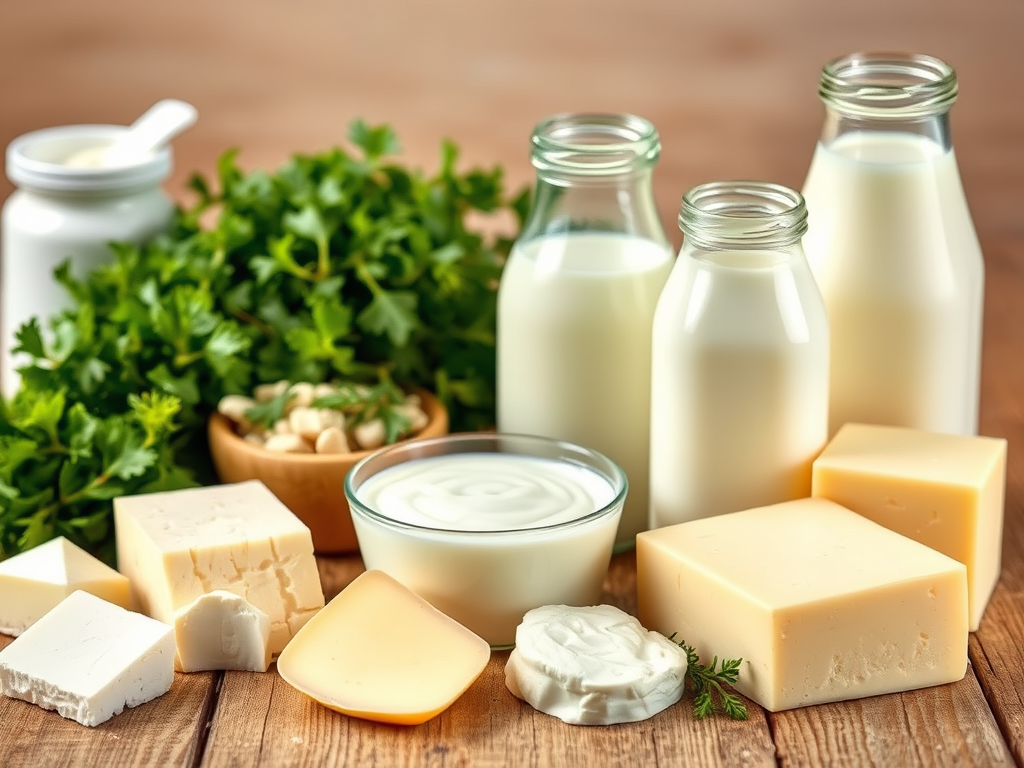
When we think of the best foods to help lower blood pressure, dairy usually doesn’t come to mind. But if there’s one blood pressure–friendly cheese that experts recommend, it’s Swiss.
Swiss cheese, known for its “eyes” (or holes) and mildly sweet and nutty flavor, has healthy properties that might help support better blood pressure levels, says Sheri Gaw, RDN, CDCES. Here, we dive into the research behind Swiss cheese’s heart-healthy properties, plus how to incorporate the cheese into a balanced diet plan.
Why Swiss Cheese Is the #1 Dairy Product to Lower Blood Pressure
Low in Sodium
Cutting back on sodium is one of the best ways to help lower your blood pressure. And if cheese is a beloved part of your daily diet, swapping some higher-sodium options for Swiss is a smart way to sustain a balanced and enjoyable eating plan. And it’s not hard to do. Swiss is one of the lowest-sodium cheese options out there, says Gaw. A 1-ounce serving of Swiss cheese contains about 52 milligrams of sodium, or 2% of the Daily Value. Compare that to 1 ounce of Cheddar, which has about 185 mg, or 8% of the DV.
Great Source of Calcium
While dairy is often associated with causing heart issues, research shows that calcium in dairy foods such as Swiss cheese does not increase blood pressure or risk for hypertension, says Gaw: “In fact, it may reduce the risk of stroke.”3 Swiss cheese is a stellar source of calcium—1 ounce provides about 20% of the DV.
Contains Bioactive Peptides
We know protein helps keep you satiated and supports muscle mass, but research suggests that the protein in cheese is also a good source of bioactive peptides, which may benefit blood pressure. Swiss cheese, specifically, contains two peptides—Ile-Pro-Pro and Val-Pro-Pro—that have been shown to have anti-hypertensive effects.4 However, more research needs to be done to nail down the amount of cheese it takes to reap these health benefits.
How to Enjoy Swiss Cheese
Swiss is delicious as a standalone snack, and it’s just as great paired with other foods or in recipes. Here are a few tasty ways to enjoy Swiss:
Pair it with crackers: Gaw recommends pairing Swiss cheese with whole-grain crackers for an energy boost that promotes blood sugar and blood pressure management.
Pair it with fruit: Gaw recommends pairing a slice of Swiss cheese with fruit for a low-sodium snack. Any fruit works, but we especially like apples for the flavor combo. “This snack is also good for blood pressure and blood sugar, thanks to its dose of calcium, protein, potassium and fiber,” Gaw says.
Try it in a sandwich: Gaw recommends stacking a grilled chicken sandwich with a slice of Swiss cheese, lettuce and slices of tomatoes and avocado. “This snack can be part of the Mediterranean and Dietary Approaches to Stop Hypertension (DASH) dietary patterns, which help lower blood pressure,” adds Gaw.
Add it to a salad: Swiss adds protein and calcium, plus umami flavor, to a bowl of greens. Try this Green Goddess Salad with Chickpeas recipe.
Do you feel like you’ve tried “all the things” to get a better night’s sleep—kicking caffeine after lunch, avoiding post-dinner snacking and nixing the nightcap beverage—yet something isn’t clicking and you’re still falling short on shut-eye? Rest assured, we hear you loud and clear. We asked a team of sleep experts to share their top afternoon habit in the name of better sleep. Their response? Getting ample afternoon sunshine.
Are you among the 40% of Americans who have fallen asleep in the middle of the day (unintentionally) in the last month?1 Clearly, you’re not alone. The Centers for Disease Control and Prevention reports that 1 in 3 adults are not getting the amount of sleep their body needs to perform at its best.1
Why Getting Afternoon Sunshine Is the #1 Habit for Better Sleep
Helps Regulate Circadian Rhythm
Getting outside for some afternoon sunshine may be the gatekeeper to help regulate your body’s natural sleep cycle. Raj Dasgupta, M.D., chief medical advisor for Sleepopolis, shares, “Afternoon sunlight exposure plays a key role in regulating your circadian rhythm, which governs your body’s sleep-wake cycle. That burst of bright light, especially between 1 p.m. and 3 p.m., can help anchor your internal clock, making it easier to fall asleep at night and wake up feeling more refreshed.”
Research supports this theory too, highlighting the disruptive effects low sunlight exposure had on sleep and circadian rhythm during the COVID-19 pandemic.2 While individuals may have stayed in bed longer due to restrictions in place, this doesn’t mean they logged more zzz’s necessarily. Instead, it showed a sense of social jet lag, in which their natural ability to get up and go was delayed.2
Supports Vitamin D Levels
Research shows that a deficiency in vitamin D can impact your sleep health, influencing sleep quality.3 While you can get vitamin D in your diet from foods like salmon and fortified products or even from a supplement, your body also makes it from sunlight exposure. A study found that vitamin D levels increased in both younger and older adults when exposed to sunlight for 30 minutes around midday (when sunshine is at its peak).4 Incorporating an early-afternoon walk in the sun is an easy way to naturally boost your vitamin D for better sleep health.
It May Get You Moving
Morning and midday exercise has been shown to be an important strategy to help improve sleep health. Research shows that regular exercise improved sleep quality and shortened the time it took individuals to fall asleep.5 Marie-Pierre St-Onge, Ph.D, CCSH, FAHA, director of the Center of Excellence for Sleep & Circadian Research at Columbia University Irving Medical Center, is a big proponent of implementing this strategy in the name of better sleep. “Daytime light exposure is associated with better alertness, which could have double utility: Taking a brief walk outside in the afternoon would get people moving and exposed to natural bright light. Both have benefits for sleep and overall health!”
The Best Walking Plan to Help You Reduce Stress
Increases Cognitive Performance
If you’re feeling like that afternoon nap is calling your name more than you care to admit, getting an afternoon bout of sunshine (even through an office window) may be the best thing you can do. A study explored this topic and found that office workers who received sunlight exposure (via their office desk window) not only logged 37 more minutes of sleep but also scored 42% higher on a test designed to evaluate their ability to make complex and smart decisions.6
Depending on where you work, sitting near an office window might not be feasible. But any sunlight is better than no sunlight. Consider taking your meetings in a location with sunlight exposure or opt for a walking meeting outdoors.
Other Strategies for Better Sleep
Logging that sunshine may be a top choice, but it’s not the only strategy to implement to improve your sleep hygiene. Clinical sleep psychologist Leah Kaylor, Ph.D. PLLC, shares, “As adults, we have the tendency to go, go, go! There needs to be a shift from wakefulness to a state that prepares the mind and body for rest.”
Consider Kaylor’s other recommendations to sleep better tonight.
Limit Caffeine Intake After 2 p.m. Caffeine is a stimulant that works by blocking adenosine, a key brain chemical that promotes sleepiness. But, it takes about four to six hours to metabolize caffeine, meaning if you have a cup of coffee at 2 p.m., a portion of that caffeine may still be in your system at bedtime.7 This can interfere with your body’s natural wind-down process. Instead, opt for a comforting cup of herbal tea if you’re looking for something to sip on.
Set a Consistent Sleep Schedule. Consistency reinforces your internal clock and improves sleep quality. While you may have an occasional night out (maintaining a social life is important too), in general, aim to go to bed and wake up at the same time every day—even on weekends.
Stop Eating Three Hours Before Bed. In most cases, you want to wrap up your eating about three hours before bed. Breaking down food requires energy and activates muscles throughout your digestive system. Eating late forces these organs to remain active when they should be resting, preventing them from repairing microdamage and restoring optimal function.
Limit Alcohol. While alcohol’s sedative properties may initially promote sleep, the quality of that sleep is significantly affected. People who use alcohol as a sleep aid often wake up feeling tired, groggy or unrested due to disruptions in their sleep, including reduced deep sleep, frequent awakenings and shallow rest.8
Implement a Wind-Down Routine Two Hours Before Bed. Embrace a wind-down routine tailored to your interests and realities. This is important to signal to your body that it’s time to rest. Consider journaling, gentle stretching, meditation, a warm bath or other activities that bring you joy (without an adrenaline rush!).
Limit Screen Time One Hour Before Bed. Minimize your exposure to blue light via your everyday electronics. Blue light shares the same wavelength as sunlight and is particularly effective at suppressing production of melatonin, a hormone that helps us fall asleep. Exposure to light when you’re trying to rest confuses the brain into thinking it’s still daytime, affecting the body’s ability to wind down in preparation for sleep.
Our Expert Take
Sleep experts agree that getting afternoon sunshine is one of the best strategies you can implement to log better sleep. Daylight sun exposure benefits your circadian rhythm, helping regulate your sleep-wake cycle. Plus, it helps increase your body’s natural vitamin D levels (which may be impacting the quality of sleep if you’re deficient). The bright side of this habit is that it’s cost-free and adds some additional activity into your day, another bonus for better sleep health.
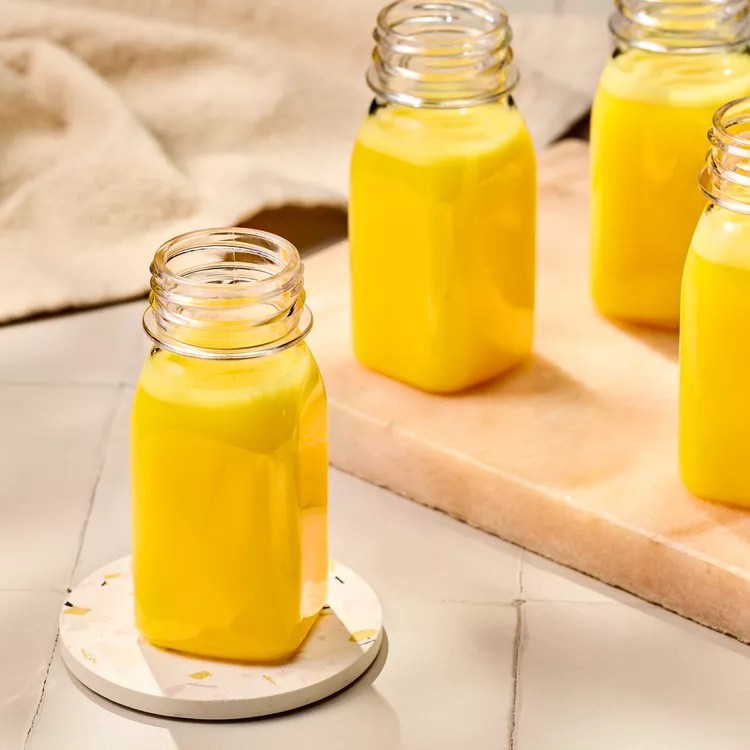
This bright, summery shot blends the anti-inflammatory benefits and earthy flavor of turmeric with ginger and a touch of heat from ground pepper, while pineapple and fresh-squeezed orange juice add a naturally sweet-tangy balance. While fresh turmeric and ginger add the biggest flavor, ground ginger and turmeric can be used in their place.
These Pineapple-Ginger-Turmeric Shots combine anti-inflammatory, antioxidant-rich ingredients to help support a healthy immune system. Tropical notes from pineapple, coconut water and orange juice make up the base of these shots, while ginger, turmeric and black pepper infuse their warm, earthy undertones. A little bit of lemon juice helps balance the flavors. Keep reading for our expert tips, including what ingredient substitutions you can make.
Tips from the EatingWell Test Kitchen
These are the key tips we learned while developing and testing this recipe in our Test Kitchen to make sure it works, tastes great and is good for you too!
To extract the maximum amount of juice from a fresh orange, roll it on the countertop while applying gentle pressure, then use a citrus juicer or press if you have one.
We chose a mix of pineapple and orange juice because it balances the sharpness and spiciness of turmeric and ginger.
If you prefer juice without pulp, you can strain it through a fine-mesh sieve. However, keep in mind that straining it will reduce some of its nutritional benefits.
Feel free to use any flavored coconut water you like, and you can also blend in different fruits such as peaches, apricots, apples or strawberries. Additionally, adding spinach or kale can boost the nutrient content of your juice.
Nutrition Notes
Pineappleis loaded with essential nutrients, like vitamin C, antioxidants and fiber. Pineapple also contains bromelain, an enzyme that helps your gut with digestion.
Orange juicecontributes more immune-supporting vitamin C to these shots. While this recipe calls for fresh-squeezed OJ, if you choose to use store-bought, get it fortified to add calcium and vitamin D to these shots.
Coconut wateradds small amounts of minerals that also act as electrolytes—potassium, sodium, magnesium and calcium. It’s also been linked to a myriad of health benefits, from supporting blood sugar and blood pressure to reducing cell damage and improving digestion.
Ginger and turmericare similar in their health benefits. They’re both known for their anti-inflammatory properties, which help reduce inflammation and relieve pain. Both of these spices also support heart health and may reduce cancer risk. Because turmeric has low bioavailability, it must be consumed with black pepper, which increases its absorption into the body—so be sure to include the black pepper in these shots.
Your gut impacts digestion, immunity, mood and even how long you live—it’s that vital.
Mint supports gut health by easing cramps, reducing inflammation and fighting bad bacteria.
Use fresh mint leaves or tea to gently aid digestion. Just be cautious if you have acid reflux.
Gut health is a hot topic—and, quite frankly, for good reason. Your gastrointestinal system doesn’t just digest your food, it also houses your unique microbiome, or the trillions of bacteria and microbes that reside within your gut. To say it’s kind of a big deal would be an understatement.
Whether you struggle with a digestive condition like irritable bowel syndrome (IBS) or you’re simply a health enthusiast who is eager to care for your gut health, we’ve got you covered. Leading gut-health dietitians have shared their No.1 herb to add to your diet if gut health is on your radar.
Why Is Gut Health Important?
Feeling sick, tired, fatigued, irritable, moody? If any of these sound like something you’ve experienced before, then it’s time to take a closer look at your gut health. Feeding and fueling your microbiome to the fullest is crucial for not only your physical well-being, but your mental well-being, too.
Research shows a direct impact of the gut on both health and disease–even suggesting that a healthy microbiome plays a role in longevity. One study found that people who tend to live the longest consume more fiber, and as a result, have microbiomes that resemble those of much younger people.1 (It’s safe to say that fiber is our favorite F-word!)
“Prioritizing a healthy gut is crucial for several reasons, including digestive efficiency, immune support and mental health and mood regulation,” says Jessie Wong, RDN, a gut-health dietitian and founder of Poopedia, a website devoted to improving poop consistency. “Having a healthy gut optimizes the breakdown and absorption of nutrients, ensuring that the body gets the essential vitamins and minerals it needs for overall health and functioning,” she says.
In addition, gut health is also important for disease prevention and management. “Given the microbiome is responsible for the inflammatory response, it’s crucial to optimize your gut health to prevent chronic inflammation that can occur in diseases like cardiovascular disease and diabetes,” says Beth Rosen, M.S., RD, owner of Beth Rosen Nutrition. “Plus, a balanced microbiome can help to reduce constipation, diarrhea, gas and bloating in digestive disease diagnoses,” she says.
Health Benefits of Mint
This small but mighty herb packs a flavorful punch of nutrition in every bite. According to gut-health experts, mint is the No. 1 herb you need to add to your eating plan.
But, just why is this popular flavor in toothpaste and chewing gum so stellar when it comes to gut health? Mint has properties that help reduce inflammation and stomach cramping and can kill harmful microorganisms, says Wong.
Mint is the general term given to the family of plants that exhibit that minty-fresh feeling you’ve come to know. While two of the most common forms of mint you’ve likely encountered include spearmint and peppermint, the latter is the one most frequently encountered when you hear mint and gut health combined.
In fact, research has found that peppermint oil, for example, can help relieve digestive discomfort in people who have IBS, as well as quell indigestion—and it’s been shown to be safe to use for short-term relief.2 “Mint’s antispasmodic properties help relax the muscles of the digestive tract, while its anti-inflammatory and antimicrobial effects promote a balanced gut environment,” says Wong.
It is worth noting that doses used in research don’t exactly translate to the same mint we’d use in a kitchen. Meaning you can’t expect a leaf of mint to alleviate symptoms associated with IBS overnight. However, drinking mint tea has been used to alleviate stomach pain and nausea.3 If you are interested in using something stronger, like peppermint oil, talk to a healthcare professional before using supplements to make sure they’re safe for you.
Mint is a great choice, but it’s not the only herb that bodes well for your GI tract. “Other herbs like ginger, turmeric and fennel also offer substantial benefits. It’s essential to adopt a holistic approach, incorporating a variety of herbs and foods to support overall gut health,” says Wong.
Tips for Including Mint in a Healthy Eating Pattern
Adding fresh mint into a healthy eating pattern doesn’t require a trip to a specialist. “While using fresh mint leaves may not reproduce the same effects seen in clinical trials, it still adds a refreshing flavor to dishes,” says Wong.
With that in mind, Wong recommends clients use three to five fresh mint leaves in recipes. “This amount is a good starting point for adding freshness and a mild digestive benefit to their meals,” says Wong.
Rosen agrees, adding that peppermint can also be steeped as a tea. One thing to keep in mind is being careful with mint if you have acid reflux. Mint can be a trigger for GERD (gastroesophageal reflux disease), especially if you consume a lot of it.4 Understanding how mint affects you will be important for deciding how to include it in your eating plan. “While this may irritate those with GERD, for others it can help alleviate indigestion and nausea,” says Wong.
To get you started on your journey using mint in your own kitchen, first and foremost, store it properly. This can be done on the counter or in the fridge, as long as you follow these tips for storing fresh mint.
Dietitians love these six “bad” foods because they contain nutrients important for blood pressure.
Baked potatoes, whole milk and orange juice contain potassium, which helps lower blood pressure.
Whole grain breakfast cereals, dark chocolate and coffee also offer benefits.
There’s conflicting messages around foods that are “bad” for blood pressure, leaving you scratching your head trying to figure out which foods you should actually avoid. High blood pressure, or hypertension, is a condition where the force of blood against your artery walls is consistently too high. This pressure can put extra strain on your heart and lead to serious health issues over time. While managing high blood pressure isn’t just about food, diet plays a crucial role in keeping it under control.
When it comes to food choices, some guidelines are more straightforward than others. For example, high sodium intake is known to increase blood pressure. However, some foods that get labeled as “bad” for blood pressure may actually be perfectly fine—and even beneficial—to include in your diet. This article is here to flip the script on a few commonly misunderstood foods to show you that not all “bad” foods are the villains they’re made out to be when it comes to lowering blood pressure. Stick around and get ready to rethink your grocery list!
1. Breakfast Cereal
“Breakfast cereals can get a bad rap but it’s time to rethink this pantry staple, especially for heart health,” says Karman Meyer, RDN. When made from whole grains and low in added sugar, breakfast cereal can be a helpful addition to a blood pressure-lowering diet. One study involving over 10,000 people found that those who ate more whole grains had a significantly lower chance of developing hypertension compared to those who ate less.1
Meyer suggests looking for a cereal with at least 5 grams of fiber per serving, as there is a potential link between fiber intake and reduced blood pressure.2 You’ll also want to do a quick scan of the ingredient list and look for a whole grain, like oats or 100% whole wheat flour, as the first ingredient. Another benefit of sitting down to a bowl of whole grain breakfast cereal in the morning? When enjoyed with milk, you get a boost of magnesium and calcium, both of which are important for reducing blood pressure, adds Meyer.3
2. Dark Chocolate
“One food often considered ‘bad’ that may actually support healthy blood pressure is dark chocolate. While it’s sometimes seen as an indulgence, small amounts of dark chocolate (at least 70% cocoa) contain flavanols—plant compounds that help improve blood vessel function and increase nitric oxide, which relaxes blood vessels and can lower blood pressure,” says Lisa Young, PhD, RDN. One study looked at the effects of consuming 1 mg of chocolate per gram of body weight during periods of stress. The results showed that dark chocolate consumption was associated with a 10% reduction in diastolic blood pressure, while milk chocolate showed no significant benefit.4 For optimal health benefits, Young recommends sticking to 1 or 2 small squares (about ½ ounce) at a time to avoid excess sugar and calories.5
3. Baked Potatoes
Thanks to their high carb content, potatoes are often lumped into the “limit” category. Baked potatoes in particular get a bad rap as they’re often loaded with butter and cheese. While you may want to make some adjustments to your toppings, Colleen Wysocki, MS, RDN, CLC points out that baked potatoes contain a key nutrient for blood pressure management: potassium.6 “Increasing potassium is just as important as decreasing sodium to lower blood pressure,” explains Wysocki. “Potassium helps open up the blood vessels and supports the elimination of excess sodium in the urine. Both of these actions contribute to lower blood pressure,” she adds.
For folks with high blood pressure, the American Heart Association recommends consuming 3,500 mg to 5,000 mg of potassium daily.7 Baked potatoes can help make a serious dent in your potassium needs, with one medium baked potato providing 1,110 mg of potassium.8
Before planning your next DIY baked potato bar, Wycoski offers some words of caution: “It’s important to keep in mind that a baked potato with added salt, butter, cheese or bacon [may] have high levels of sodium, and negate the benefits of the inherent potassium. Instead, consider a low-sodium plant-based spread, a dollop of sour cream or yogurt or olive oil with green onions to enhance the flavor”.
4. Coffee
Drinking coffee gets a bad rap when it comes to blood pressure support because it contains caffeine—a stimulant known to temporarily raise blood pressure. This short-term effect happens because caffeine can cause the blood vessels to tighten, leading to a quick spike in pressure. On top of that, coffee’s energizing effects are often associated with an increased heart rate, which makes some people wary about its impact on heart health.9
However, it’s not all bad news. In fact, the long-term effects of coffee are much more positive. Some data suggests that drinking coffee consistently and in moderation (about 1 to 3 cups per day) does not increase the risk of developing hypertension, and it may even offer protective benefits. For people who already have high blood pressure, regular moderate coffee consumption does not seem to worsen the condition or lead to uncontrolled blood pressure. It may even reduce the risk of death from other causes. Interestingly, it’s occasional coffee drinkers who are more likely to experience a temporary spike in blood pressure.9
5. 100% Orange Juice
Orange juice often gets a bad reputation because of its sugar content. While moderation is key, 100% orange juice (without added sugars) may actually be helpful for lowering blood pressure. Orange juice contains potassium and is an excellent source of vitamin C, both of which may help with blood pressure management.1011
6. Whole Milk
Whole milk has been criticized for its saturated fat content. However, recent research suggests that whole milk may not be deserving of its “bad” reputation. Turns out, dairy fat contains unique types of saturated fats that may not negatively affect heart health in the same way as other kinds of saturated fats, like those found in ultra processed foods, do.12 Further, studies examining whole fat dairy products haven’t shown a link between full fat dairy consumption and worsening or increased risk of high blood pressure.1314
This is good news as whole milk is a great source of essential nutrients like calcium, potassium and magnesium—all of which are critical for maintaining healthy blood pressure levels and are emphasized on the Dietary Approaches to Stop Hypertension (DASH) diet.15 Plus, thanks to its higher fat content, whole milk may be more filling than low-fat or skim.
While not ideal, we all have days from time to time when we forget to drink enough (or any) water. While forgetting to hydrate every once in a while is unlikely to pose serious side effects, doing so habitually can lead to big problems. “Hydration is important for a multitude of reasons,” says Craig Cheifetz, M.D., FACP. Not getting enough water can take a toll on our organs, with Cheifetz noting that people who are chronically dehydrated are more prone to issues like kidney stones and urinary tract infections.12
In terms of immediate effects, being dehydrated can raise your heart rate, putting strain on your heart.3 It can also muddle your thoughts and make you feel fatigued. “We see the extreme examples when somebody unfortunately gets lost, or it hasn’t hydrated enough out in the wilderness, or after extreme exercise. Our body does not function as well, so it impairs cognition and physical function,” explains Cheifetz.
So, if you forgot to drink water today, what can you do tonight to quickly rehydrate? We asked Cheifetz and a registered dietitian to weigh in.
How Much Water Is Enough?
General guidelines suggest drinking about 11.5 cups (2.7 liters) of water per day for women and 15.5 cups (3.7 liters) per day for men. However, how much water you actually need depends on a variety of factors and may even change day-to-day.4 “There are all kinds of different recommendations out there, and there’s not really an optimal amount of water for everyone,” says Amanda Beaver, RD. “Our water needs are going to vary depending on our exercise levels and factors like how much fiber we’re eating.”
Though Cheifetz does adhere to the USDA guidelines, he explains that not all of that liquid needs to come directly from water. The water in our food counts toward that number, which will ideally equal a bit more than the oft-quoted eight glasses of water a day. So, what should you eat to help stay hydrated? Beaver says that fruits and vegetables are the best sources of water, naming cucumbers, tomatoes, lettuce, grapes, watermelon, celery, bell peppers and oranges as hydration superstars.
“The cool thing about those is [they provide] more slow-release hydration because our body has to digest and break them down to access that water,” she says. She also names liquid foods, like yogurt, soups and smoothies, as excellent choices for people looking to meet some of their hydration needs through diet.
What You Should Do to Hydrate at Night
But what if you’ve powered through the day on protein bars and far too little water? We’ve got good and bad news for you. Habitual water drinkers hold on to hydration better than those who try to game the system by chugging their water, says Cheifetz. “Folks who guzzle their water find themselves in the restroom quicker, and it’s passing through them,” he says.
If you forgot to drink enough water during the day, Beaver recommends slowly sipping water throughout the evening and eating a hydrating dinner, like a soup and salad. It’s also a good idea to avoid beverages that may worsen dehydration, like alcohol. Cheifetz also cautions against consuming caffeinated foods and beverages at dinner, since caffeine is a diuretic.
Thinking about drinking all 11.5 or 15.5 cups between dinner and bedtime? It might not be the best idea. While exceedingly rare, it is possible to overhydrate, leading to dangerously low sodium levels (a condition known as hyponatremia). “What can happen is our electrolytes in our blood get a little too diluted and our body does not like that. It needs this optimal level for things to function properly. So we can have things like dizziness and confusion with overhydration, and it can even be deadly if we really drink too much water,” Beaver warns.
Instead, your best bet is likely to drink some water during the evening and plan for how to set yourself up for success tomorrow. For example, keeping a water bottle next to your car keys might help you remember to bring it with you to work or the gym.
If the issue is less about having water available and more about a lack of motivation to sip on it throughout the day, Beaver recommends finding flavorful, more exciting ways to hydrate. For example, she says sparkling water, either flavored or unflavored, can be a good alternative. Infusing water with lemon, cucumber and mint is another solid option, as it’s inexpensive and free of added sugars.
What About Electrolytes?
You may have a bottle or two of Pedialyte on hand for hangovers or in the event of the stomach flu—but can this electrolyte drink also make up for a day of poor hydration? The short answer: no.
Electrolytes are minerals that help move nutrients in and out of cells and conduct nerve signals throughout the body. They’re also responsible for muscle contractions, and not consuming enough of them can lead to muscle cramps. For this reason, electrolyte powders and drinks are popular among athletes and fitness enthusiasts.
Beaver says that while electrolyte products can be helpful after heavy exercise or for people who are sick, they’re unnecessary, as most people are able to get enough electrolytes in their diet. “We’re going to get so many electrolytes from our food, and one of the main electrolytes that are often in those products is sodium. Typically, our American diets have adequate amounts of sodium in them. So for some people, [electrolyte powders] are just contributing excess sodium to their diet,” she explains.
Our Expert Take
When it comes to staying hydrated, the best approach is staying on top of your water needs during the day, rather than trying to make up for them at night. As Cheifetz puts it, “People have to take a medicine every day in order to have its effects. Hydration is something we have to do every day, too.”
If you regularly struggle with meeting your hydration needs, you may be surprised by what a difference being properly hydrated can make. “People get used to just feeling a little bit more suboptimally tired and a little bit more fatigued and maybe a little more headache-prone, and then suddenly, when they improve their hydration status, they realize that it does help them feel better during the day,” says Beaver. “At the end of the day, we all want to have more energy, and we all want to feel better, and being optimally hydrated is one way that we can do that.”
Cooked grains like rice and pasta can grow harmful bacteria if you don’t cool and store them quickly.
Raw meats, chicken and fish can spread germs fast, so be sure to keep them cold and don’t let them touch other foods.
Even “prewashed” lettuce may still carry dirt and bacteria, so rinsing it again is always a smart move.
When you think of kitchen-related hazards, the first things to come to mind are probably sharp knives and hot surfaces. But the six food safety experts EatingWell spoke with say it’s the foods you prepare and consume every day that can pose the highest risks. The top three categories they named were cooked grains, raw proteins and prewashed leafy greens. Learn why these foods require extra caution—plus, tips to help you avoid foodborne illness.
1. Cooked Grains
According to NYC food protection certified executive chef Samuel-Drake Jones of Hudson VU, cooked grains are a surprisingly common source of Bacillus cereus—a toxin-producing bacterium found in starchy foods like rice, pasta and oats.1 “It’s not that grains are inherently more dangerous or carry more bacteria compared to something like raw meat—the real issue is around improper food handling,” Jones explains. “Let’s take quinoa, for example: if you make a big pot of it, pack the hot leftovers in a container and put that directly in the fridge, the center of the quinoa won’t cool down quickly. Instead, it will stay warm—between 140°F and 40°F—for way too long. That temperature range is the danger zone and creates an environment where bacteria thrive in cooked grains.”2
To help avoid this problem, Jones recommends spreading grains on a large plate or tray to evenly disperse the heat before transferring them into a food storage container and placing them in the refrigerator. You could also do what chef and certified food safety expert Carla Contreras does, and use a table fan to speed up the process. “Waiting for things to cool to room temperature takes time,” says Contreras. “An easy way that I do this is by keeping a fan in the kitchen. I pull it up to the table, and my food cools down in no time.”
2. Raw Proteins
Handling raw proteins—like red meat, chicken, fish and eggs—with care is essential for reducing cross-contamination and potential foodborne illness. “Harmful bacteria thrive on protein-rich foods,” says Nicole Garrison, IFT food scientist, certified food safety expert and owner of Bonne Vivant Nutrition. “If those protein-rich foods are poorly handled, be it unsanitary conditions in the butchering or preparation of the food or temperature abuse, the possibility of becoming sick from those foods increases.”
When transporting raw proteins home from the grocery store, Garrison says it’s a good idea to pack them in a cooler filled with ice in order to keep them out of the temperature range that bacteria thrive in. The USDA Food Safety and Inspection Service states that raw proteins left in the danger temperature zone can double in bacteria in as little as 20 minutes, and says that these foods should always be stored at or under 40°F and should never be left out of refrigeration for more than 2 hours.2
Proper handling of raw proteins is also critical for avoiding foodborne illness, as the bacteria they harbor are easily spread. “It’s important to take care when handling raw meat, as it can potentially carry salmonella or E. coli,” explains Eric Rowse, lead chef-instructor and certified food safety manager at the Institute of Culinary Education.2 He also says to use gloves or serving tongs for handling and never to wash meats or poultry. “This is an old ‘technique’ to make it safer, but in reality, you’re increasing your risk because you may be splashing bacteria around your kitchen.” However, Rowse adds that raw shellfish is the exception, as foods like clams and mussels are filter feeders picking up potentially harmful organic matter that often gets stuck in their shells.
3. Prepackaged Greens
It might seem safe enough to serve prewashed packaged lettuces right out of the bag, but according to Mary FitzGerald, founder of Safe & Sound Food Safety Consultants, they’re not always as clean as labels imply. “I experimented with a chef by adding pre-cut, prewashed lettuce into a clear container and filling it with water. We moved the lettuce around, then removed the lettuce and examined the leftover water. What remained was gray and in some cases, sandy.” She also notes that many produce houses use recycled water to rinse greens and often do an incomplete job, which is why washing prepackaged greens—whether they say triple-washed or not—is essential for avoiding contaminants.
And this goes for most produce, as nearly all fruits and vegetables carry residues from pesticides, bacteria and other potentially harmful matter. “I’m always cautious when handling fresh produce, especially leafy greens,” says Sara Bratager, senior food safety and traceability scientist at IFT’s Global Food Traceability Center. Bratager says she washes produce to remove surface bacteria before doing anything else. “Once you cut into fruits or vegetables, any bacteria on the surface can be transferred to the inside and onto your cutting board or other utensils, which is why washing before further handling is so important.” Rinsing, scrubbing and soaking produce in a vinegar solution are all good methods that can help reduce your risk of contamination.

 I would get grounded a lot. And for a lot of kids I think that’s pretty normal. But the catch is is my father is military. So his grounding is you go to your room for a week-long increments and everything is taken out of there that could be thought of as fun for you. No posters no books no toys definitely no electronics but I was a kid in the 80s so there wasn’t much chance of that. Being grounded for 3 weeks in the summer was brutal. I do recall my best friend standing down the hill out my window so that he could entertain me silently by jumping around like an idiot just to keep me from feeling like I was going insane. Good friend.

 When I didn’t get anything to eat for dinner because there were 10 of us and not anything left after everyone else took food. If I said anything about being hungry because I got no food my mother went nuts. She would scream at me and say I am a liar. Then as punishment she would deprive me of any food and demand I stay in my room or I would get a beating. So I would go days with nothing to eat because the punishment for not getting dinner and saying something was not getting dinner for a couple more days. Having a mother that lies a lot more than me calling me a liar is pretty ridiculous. If I give her eulogy it won’t be to talk about how she was a great mother.
 Being reminded every single day that I was adopted and I should be happy that they chose me.
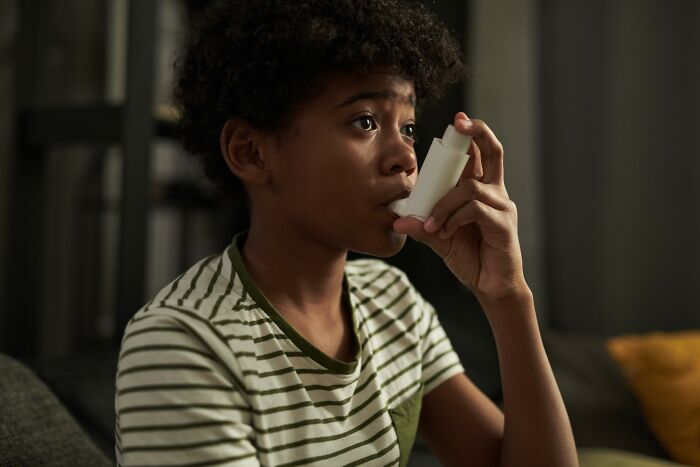 I once caught a chest cold when I was about 10 or so, except after a few days, I didn’t get better. I got worse. It got to the point where I could barely breathe. My mom insisted I must just be lacking in some vitamins, so she forced me to take these massive calcium and vitamin C pills. I didn’t get better. Things got progressively worse until the principal at the school actually called her and said “take your daughter to the d**n doctor” and the threat of looking bad in front of someone of authority absolutely scared her so she did. Turns out I had developed asthma and my blood oxygen levels were like 86%.
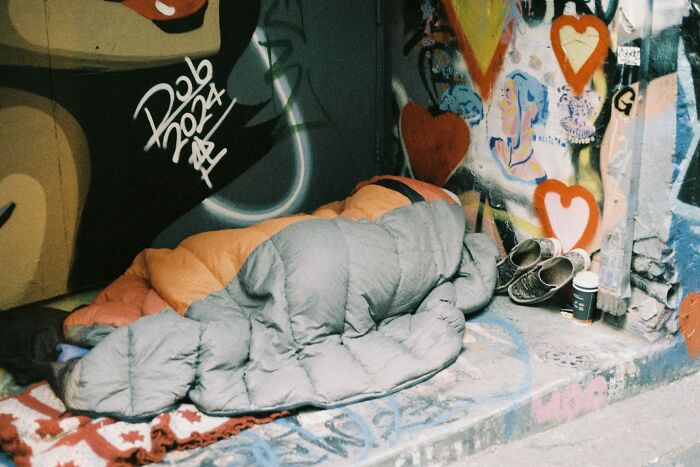 There are so many to choose from…
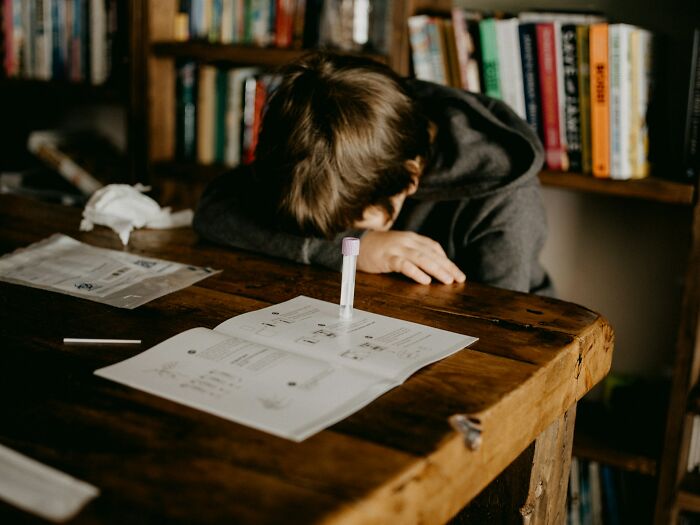 Both my parents were teachers. I spent the entire four years of high school grounded for getting C’s on my report card. No homecomings, no prom, no summers playing with friends. They were flabbergasted when I didn’t go to college, even when they told me they would disown me on graduation day if I didn’t go.
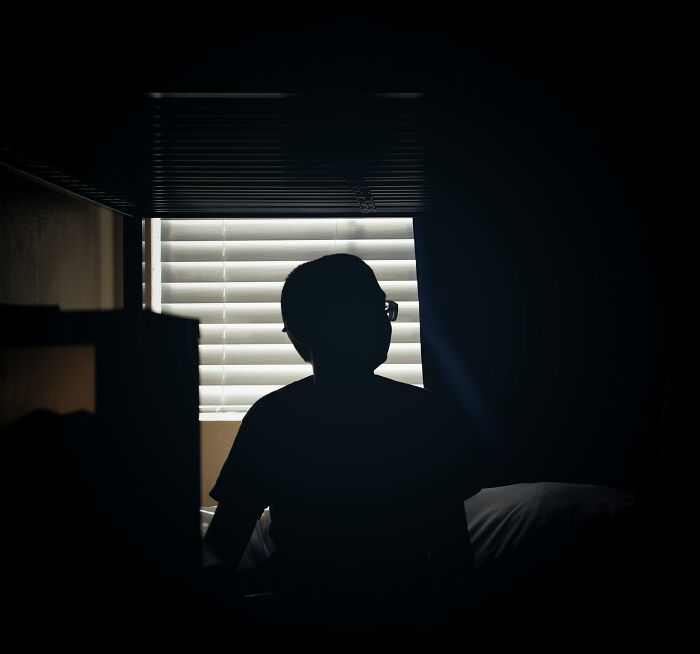 Being left alone for days with no food.
 My parents took me out of school (7th grade) for vacation. I went to all my teachers and asked for work to take with me.
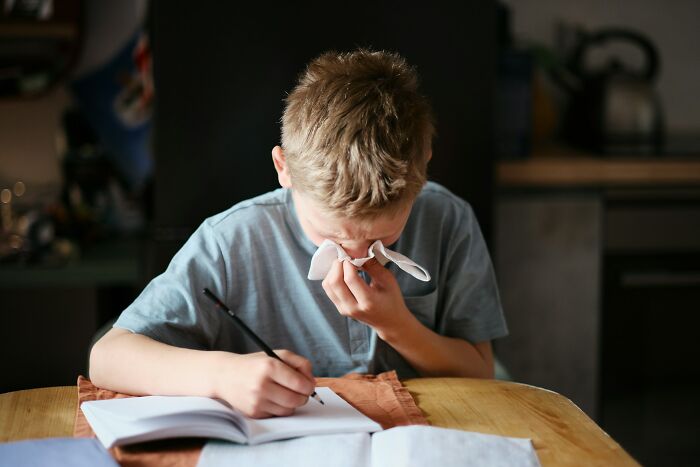 My step dad would make me write out whatever I did “wrong” a thousand times, or fill a notebook.
 Silent treatment , being ignored by everyone in the family for a period of time, because “ you were lying and didn’t admit to doing so or so , so until you decide to speak the truth no one wants to hear you “ and after days , it turned out it was my cousin who did the “ thing “ , well i never got an apology, but ended up developing avoidant attachment issues that I have no idea how to cure .
 I don’t remember what I did, but my dad whooped me with a hardback Bible. It wasn’t the regular book size either. It was a kids’ Bible, which was more of a picture book. It was wide and flat. Whipped me with it, then threw it across the room while screaming at me. He was a psycho when I was a kid. Now he’s nearing 70 and likes to reminisce about how good a childhood my sister and I had. I always correct him on it.
 My mom made us get super involved with sports to the point we didn’t do anything on weeknights but practices for those sports and weekends involved practice or traveling for competitions. If we asked to do something on a weekend we had a time slot for so many hours and it was only 1 day. So if we chose to hang with a friend on Friday night till 9:00pm that was it for the whole weekend. No wonder we all went off the deep end when we turned 18, quit every sport and I hit the bars to party. I’m fine now but man, I missed out on some fun teen years.
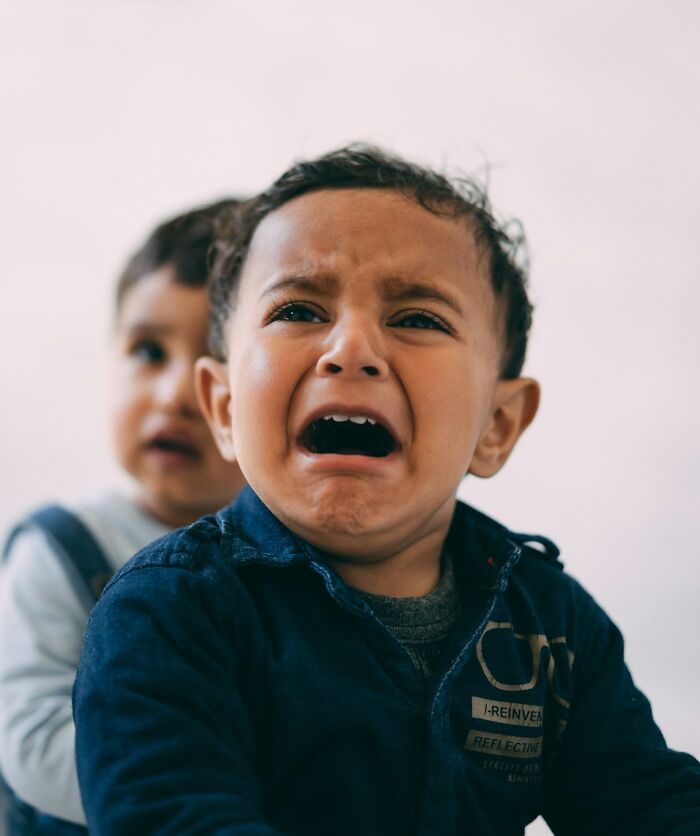 My dad gave me “taps”. He’s 6’5 and used a fraction of his strength to hit me and it hurt like hell. I will never ever raise a hand to my kids because he swears to this day it wasn’t a full smack but we simply don’t know our own strength as adults on a kids pain tolerance. I knew my boyfriend was going to be my husband when we talked about discipline and he had a similar experience, also stating he would never hit his kids because it f*s them up mentally and I agree, man.
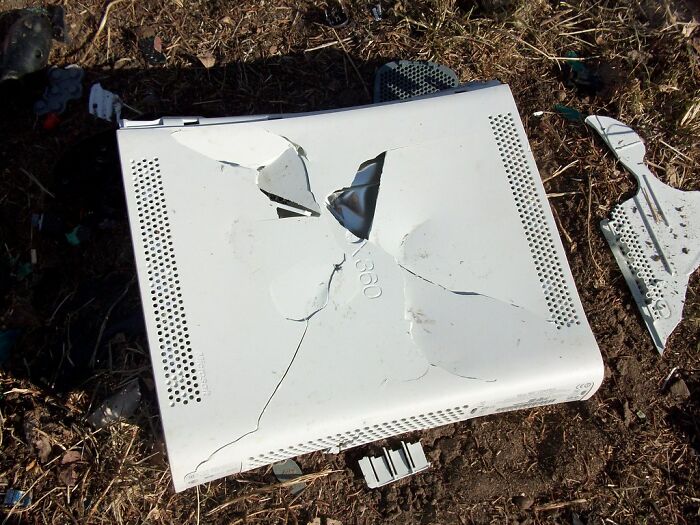 Smashing my Xbox to bits with a baseball bat before slashing the curtains with a knife to prove a point that leaving my shoes by the front door wasn’t on. I was 8.
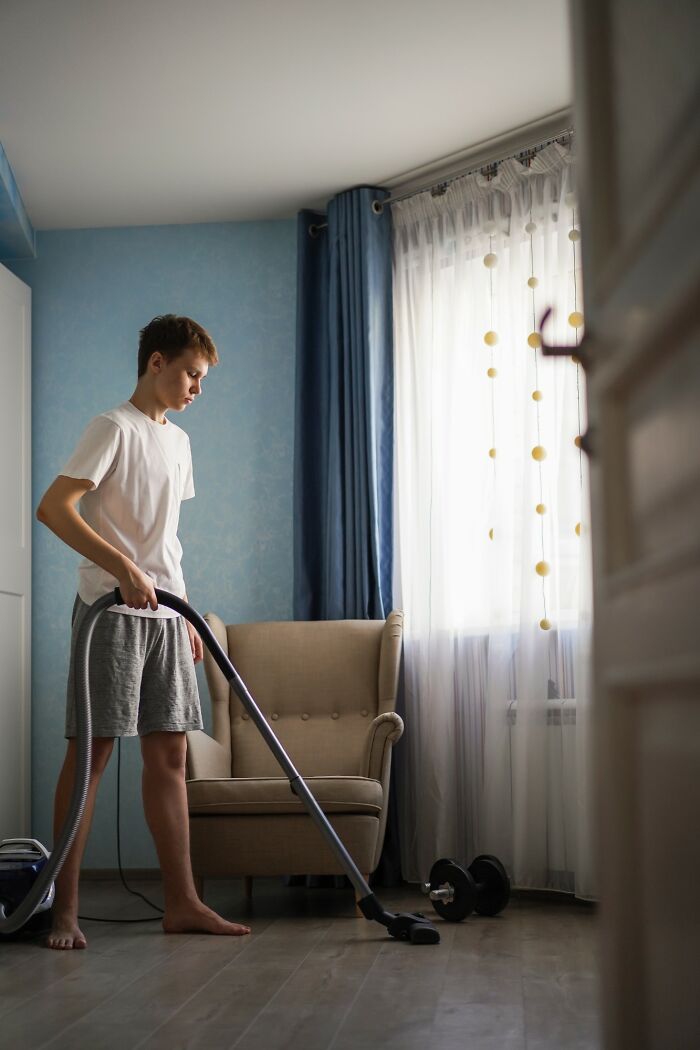 My siblings and I got sent to our rooms without Thanksgiving dinner. The reason? My mom flew off the handle at us because we weren’t cleaning the house to her liking, after we came home from church. That was the moment I realized there was something mentally wrong with my mom.
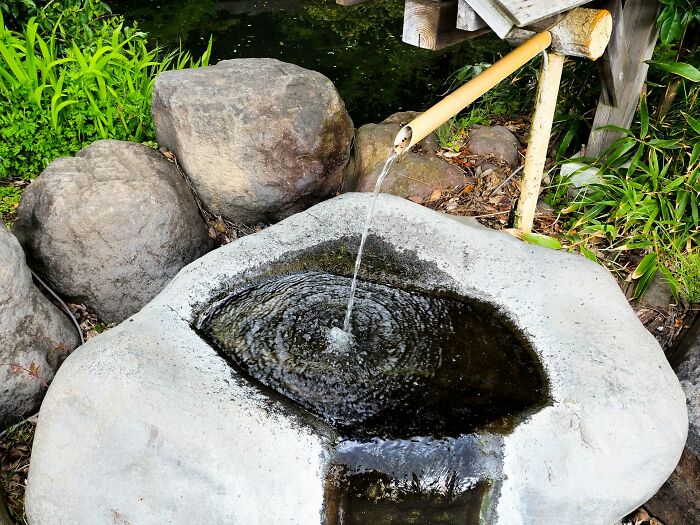 When I was very young my father ran a basin of water and shoved my head into it, over and over, while screaming at me. Not incredibly violent, but traumatizing. However I did go on to be a competitive swimmer! Learning to hold my breath early in life!
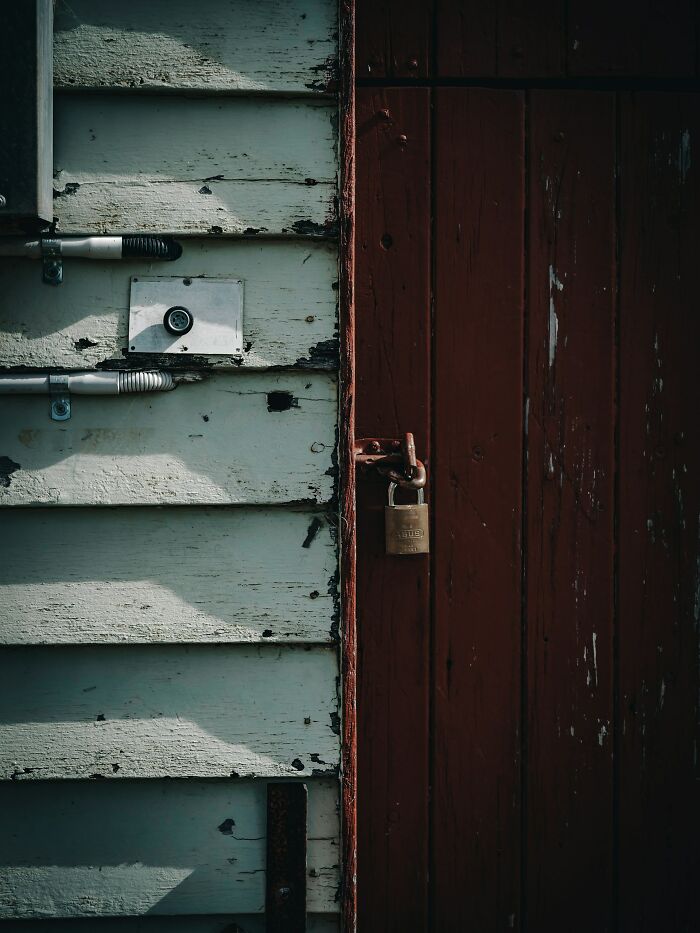 My mom would lock me in a room for hours on end. No food, water, or bathroom, and nothing for me to really do in there at all. If I cried too loudly, or god forbid had an accident because I couldn’t hold it any longer, she’d come in and beat me.
 The one that freaks people out is that I was withheld food and bathroom breaks for not understanding long division in a timely manner for my aunt.
 6th grade, last concert of the year, I have a huge solo. I told my mom that I got a sheet to see the councilor the next day (moving into Jr High stuff). She completely misunderstood what I had said, thought it was for her, and beat me from the top of my head to the bottom of my feet with one of those little plastic belts that were popular at the time. Welts everywhere.
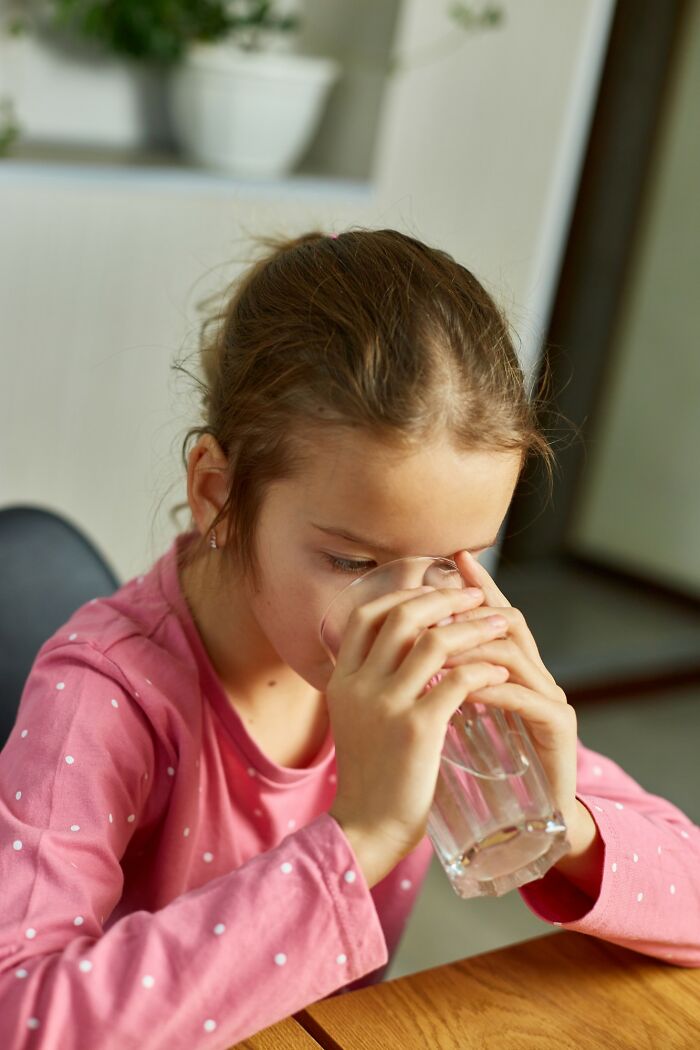 Not from my parents but from my older sister who used to baby sit me. Drinking a cup of vinegar then being locked in the attic……she was not a nice person.
 Worst, as in lasting consequences? I was 15/16 and my dad had remarried this woman who was a horrible stepmother. I can’t really remember what led up to it, but I’m fairly certain it was because I was standing up for myself over something trivial.
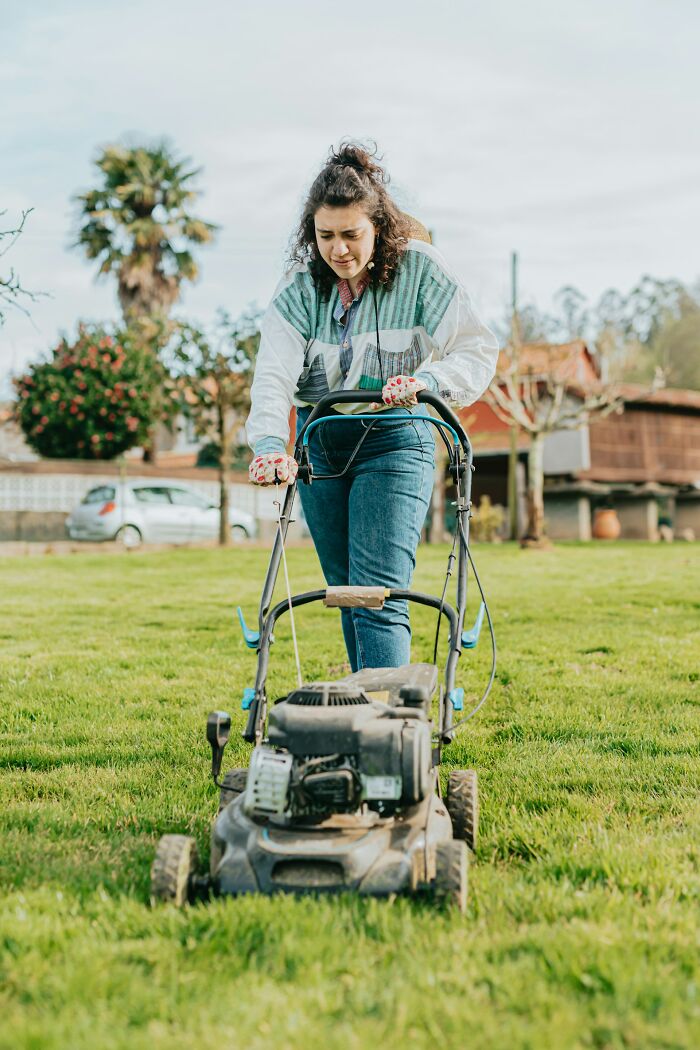 Hard labor. Everything that my dad had to do for the day (for a period of days) I did. Way worse than grounding, spanking, or taking things away.
 Getting grounded for the entire summer—no TV, no going out, just chores and boredom. It felt like a lifetime back then.
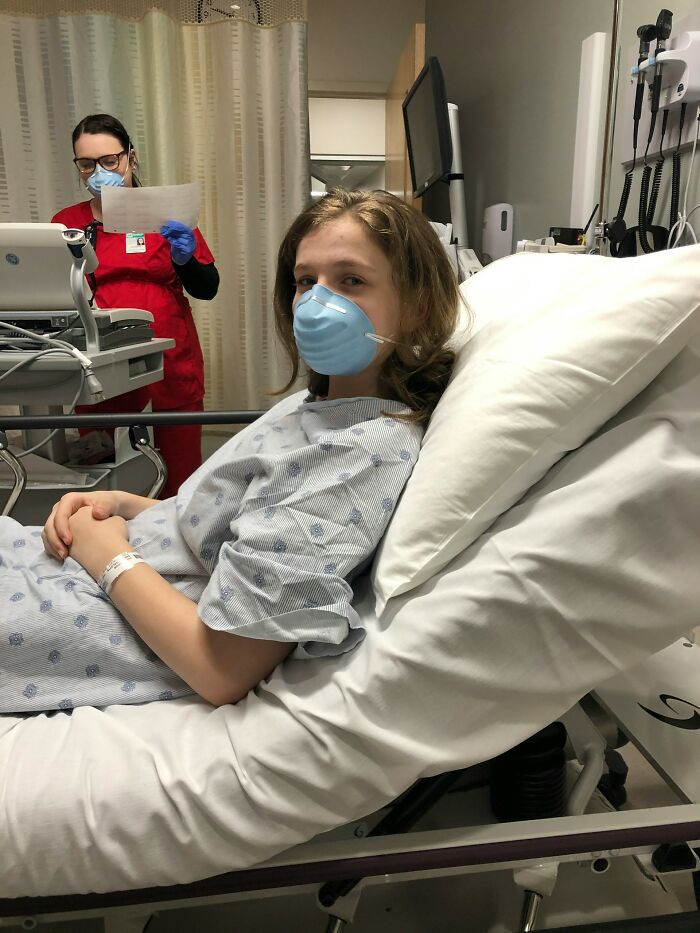 I was about 12yo and in the hospital. Doctor added a new medication. I soon complained of racing heart rate and chest pain. Staff wheeled me to the ER to get checked but by then it had passed.



:max_bytes(150000):strip_icc():format(webp)/EWL-Summer-Ginger-Shot-step-1-308_preview_maxWidth_4000_maxHeight_4000_ppi_300_quality_100-a2ef91dc99fb40c2b40da3376883b002.jpg)


 BonWelfare